
You are moving USDC from Ethereum to an Arbitrum lending market when the familiar problem appears: the decentralised application wants one network, your wallet is displaying another, and the approval screen contains technical details that are difficult to interpret quickly. In this situation, a wallet is not merely a place to store tokens. It is the interface through which you authorise smart contracts, manage permissions and accept financial risk. That is why the Rabby Chrome extension and its wider multi-chain wallet design deserve a closer look from DeFi users in Germany and across Europe.
Rabby is commonly presented as an alternative to MetaMask, but the meaningful distinction is not simply colour, layout or supported chains. The deeper difference is the point at which the wallet tries to help: before a transaction is signed. Its simulation, risk warnings and automatic network handling are designed to improve the user’s decision process. They do not make a protocol safe by themselves, and they do not remove the need for careful signing. They can, however, make the consequences of a proposed action easier to inspect.
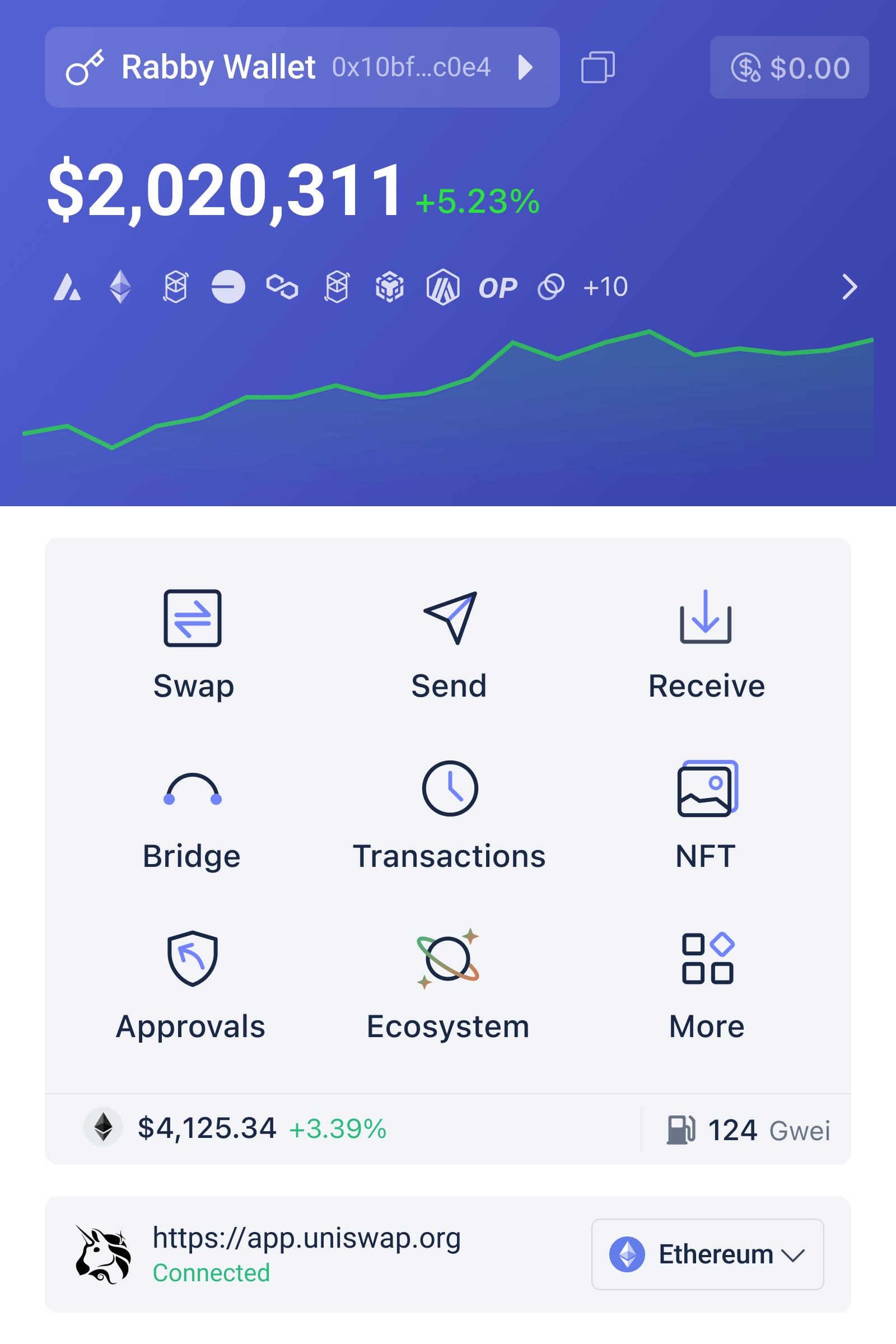
From single-network wallets to multi-chain decision tools
Early browser wallets were shaped by a simpler mental model: connect to Ethereum, select an account and approve a transaction. The growth of Polygon, Arbitrum, Optimism, Avalanche, Base, BNB Chain and many other EVM-compatible networks changed that model. Users now move between chains, bridges, decentralised exchanges, lending markets and liquid-staking applications. A wallet that requires constant manual network selection can turn a routine action into a source of avoidable error.
Rabby supports more than 140 EVM-compatible blockchains and can recognise the network requested by a dApp, switching automatically when appropriate. This is useful because it reduces interface friction, but it should not be confused with economic or technical interoperability. EVM compatibility means that many applications use related execution conventions; it does not mean that assets, liquidity, finality or security assumptions are identical across networks.
That boundary matters. A token with the same symbol on Ethereum and on a layer-two network may represent different contracts and different liquidity conditions. A bridge transfer may introduce smart-contract, relayer or messaging risk. Rabby integrates bridge routes through services such as LI.FI, which can make cross-chain movement more convenient, but convenience does not turn a bridge into a risk-free pipe. The user still needs to check the route, destination chain, fees and received asset.
For readers comparing Rabby with MetaMask, the practical question is therefore not “Which wallet has more features?” It is “Where do I want the complexity to appear?” MetaMask remains a familiar general-purpose EVM wallet. Rabby places more emphasis on displaying the expected outcome of DeFi actions and warning about suspicious behaviour. That orientation may be particularly valuable for users who interact with several protocols each week, while a simple holder who rarely signs transactions may gain less from the additional review layer.
Why simulation is more than a convenient preview
A transaction simulation attempts to model what will happen if a proposed call is executed. Before signing, Rabby shows expected changes to token balances and can flag issues such as phishing indicators, known hacks or potentially unlimited token approvals. This creates a sharper mental model than a generic “Confirm” button: the user can ask not only whether a transaction comes from a familiar website, but also what assets and permissions are expected to change.
The most important conceptual distinction is between intent and execution. A dApp may describe an action as a swap or deposit, while the underlying transaction contains contract calls, approvals and parameters. Simulation helps translate that technical payload into a more legible outcome. It is a form of pre-trade risk disclosure, although it is not an independent guarantee that the transaction is beneficial.
There are limits. A simulation depends on the state of the relevant blockchain and on the ability of the simulation system to interpret the contract behaviour. Markets can move between simulation and execution; a contract can contain complex or unexpected logic; and a malicious application may attempt to present a misleading context. Warning systems can also produce false positives or fail to recognise a novel threat. The correct habit is to treat the simulation as a second pair of eyes, not as a substitute for reading the destination, amount, allowance and network.
This is where Rabby’s security architecture has practical value. Its integrated scanner checks addresses and contracts before confirmation, while hardware-wallet compatibility with Ledger, Trezor and OneKey can keep the final signing authority in a separate device. Those layers address different risks. A scanner helps with interpretation; a hardware wallet helps protect the private key from many kinds of malware. Neither layer can prevent a user from deliberately approving a harmful transaction after ignoring a warning.
Custody, backend independence and everyday trade-offs
Rabby is non-custodial: private keys are stored locally on the user’s device and are not sent to Rabby’s servers. Its signing functions are also designed to remain usable if Rabby’s backend services become unavailable, because Rabby does not create or alter transactions on the user’s behalf. This separation is important. The wallet interface may assist with discovery, simulation and warnings, but the user retains control over signing.
Open-source software, released under the MIT licence, gives the community a basis for inspecting and reusing the code. That improves transparency, but “open source” is not the same as “automatically audited” or “impossible to compromise”. Users still face browser-extension risks, malicious downloads, phishing pages, operating-system compromise and poor backup practices. In Germany, where tax records and transaction histories may need to be reconstructed later, operational discipline matters as much as interface quality: record networks, transaction purposes and wallet addresses carefully.
Rabby also combines an integrated swap aggregator with routes from decentralised exchanges such as Uniswap and 1inch. This can reduce the need to compare venues manually and may help identify competitive execution, but the displayed best rate is not necessarily the best final result. Slippage, price impact, gas, approval costs and route complexity all affect the outcome. Similarly, the Gas Account feature can allow network fees to be paid with stablecoins such as USDC when the native token is unavailable. That solves a real usability problem, but users should still understand that fees remain dependent on network conditions and service availability.
Reward mechanisms such as Rabby Points may encourage experimentation through swaps, gas top-ups or referrals. They are best evaluated as a behavioural feature, not as a reason to increase transaction frequency. Incentives can make a product engaging, yet repeated low-value activity still creates fees, approval exposure and additional opportunities for error. The financially rational choice is to let security and execution quality lead, with points treated as incidental.
Which user is Rabby best suited to?
Rabby is a strong fit for an active EVM user who moves between chains, signs approvals regularly and wants transaction outcomes presented before confirmation. Its browser extension is available for Chrome, Brave and Edge, with desktop versions for Windows and macOS and mobile applications for iOS and Android. The automatic network switching and multi-chain account view can make a fragmented DeFi environment easier to navigate.
It may be less compelling for someone who only holds assets, uses a single trusted network and prefers the smallest possible interface. There is also a learning cost: more warnings and more detailed simulations require attention. A wallet cannot reduce risk if its user clicks through every alert mechanically. The reusable decision rule is simple: before signing, verify the chain, destination, asset movement, allowance and gas source; then compare those facts with your intended action.
The recent project messaging around Rabby as a wallet for Ethereum and EVM chains reflects a wider direction in the category: wallets are evolving from passive key containers into transaction interpretation layers. If multi-chain applications continue to spread, the useful competitive advantage may not be the raw number of supported networks, but the quality of the explanations shown at the moment of risk. That remains an open question because warning quality is difficult to measure from feature lists alone. Users should watch how accurately simulations reflect real execution, how clearly bridge routes disclose assumptions and how consistently alerts distinguish serious threats from harmless complexity.
For those who want to examine the product’s current setup before deciding, the project information is available at https://sites.google.com/kryptowallets.app/rabby-wallet-extension-app/. The sensible conclusion is not that Rabby eliminates DeFi risk. Rather, it changes the point at which some risks become visible: earlier, before the signature. In a market where one misunderstood approval can matter more than a dozen successful swaps, that is a meaningful design choice.
Frequently asked questions
Is Rabby safer than MetaMask?
It is more accurate to say that Rabby emphasises different safety mechanisms. Its transaction simulation, security scanner and multi-chain review flow can make risks easier to identify before signing. However, both are self-custody wallets, and the user remains responsible for backups, device security, website verification and the final approval. No interface can guarantee that a smart contract or bridge is safe.
Can Rabby sign transactions if its servers are unavailable?
Rabby’s core signing functions are designed to work independently of its backend because private keys remain locally controlled and Rabby does not create or modify transactions on the user’s behalf. Some convenience features, such as warnings, route discovery or service-dependent account functions, may still rely on external infrastructure and could be affected by outages.
Does transaction simulation prevent scams?
No. Simulation shows expected state changes and can identify certain warning signals, but it is an analytical aid rather than a security guarantee. Unexpected contract logic, changing market conditions, malicious interfaces or an incorrectly interpreted warning can still create losses. Treat the preview as a required review step, not as automatic approval.