
Okay, so check this out—I’ve been poking around Solana explorers for years now. Wow! The first thing that hits you is speed. My instinct said “fast is good”, but then data navigation matters way more than raw speed. Initially I thought a clean UI was the main win, but I learned that deep transaction context changes everything when you’re hunting NFTs or tracing funds.
Whoa! Tracking an NFT on Solana can feel like following a paper trail in a windstorm. Medium-level tools show mint events, but they often miss the subtle provenance flags. On one hand, you want a simple token view; on the other hand, you need rich logs with program-level calls. Seriously? You can get both with the right explorer, though actually wait—there are trade-offs between usability and granularity.
Here’s the thing. When I first used Solscan I was mostly curious about token transfers. Hmm… The transfers were obvious, but somethin’ else caught my eye: meta-program interactions right in the transaction details. Those program logs tell you whether a transfer was part of a marketplace sale, a burn, or an exotic cross-program invocation. My gut reaction was excitement, then skepticism, then an “aha” when I correlated the logs with on-chain market behavior.
Really? It’s surprisingly human to feel that tug—like when you’re tracking a suspected wash sale or a shady mint. Short bursts of intuition guide the initial chase. Then you dig into the analytics and you either confirm your hunch or you realize your map was missing roads. On one hand these tools make you feel smarter; on the other hand they reveal how little you actually knew.
Wow! The NFT tracker features are practical, not just flashy. Medium pages show holder distribution and supply concentration, which matters if you’re assessing rug risk. Longform analysis across collections helps you spot whales or clusters of activity that hint at coordinated minting or flipping. I’m biased, but that kind of visibility is a difference-maker when deciding whether to buy or hold.
Whoa! There’s a moment when raw numbers start telling stories. For instance, a sudden increase in transfer volume paired with a cluster of new wallets can mean a secondary-market spike. My instinct said “pump”, though actually wait—I learned to check deposit patterns to known marketplaces first. That nuance is where analytics beat surface-level charts, and it bugs me that many people skip that step.
Here’s a small personal anecdote. I once tracked a promising drop where the floor doubled overnight. Wow! I followed the wallet hops and found the original minter moving pieces through several wallet addresses. That pattern looked weird, and the analytics confirmed abnormal price pressure from a few addresses. I’m not 100% sure it was malicious, but the trace made me step back rather than FOMO buy.
Seriously? The difference between “nice graph” and “actionable insight” is context. Medium-level metrics like active wallets, swap volume, and program call counts become meaningful when paired with event logs. If you don’t cross-check events you might misread liquidity for genuine demand. On one hand you want flashier dashboards; on the other hand you want transaction-level fidelity.
Wow! One practical bit: exportable CSVs and API access save hours. I often build quick models locally to validate what I see in the explorer. Long-term patterns emerge only when you aggregate over time, which raw UI snapshots don’t show well. My workflow mixes quick gut checks with slower, reproducible analysis, because intuition alone leads to dumb trades.
Whoa! That mix of quick and slow thinking is exactly what dual-system analysis is about. Initially I thought “charts tell the story”, but then realized charts lie without transaction metadata. Actually, wait—let me rephrase that: charts are a starting point, not a verdict. On one hand an upward curve signals interest; though actually you might be looking at market-maker activity or treasury rebalances instead of organic demand.
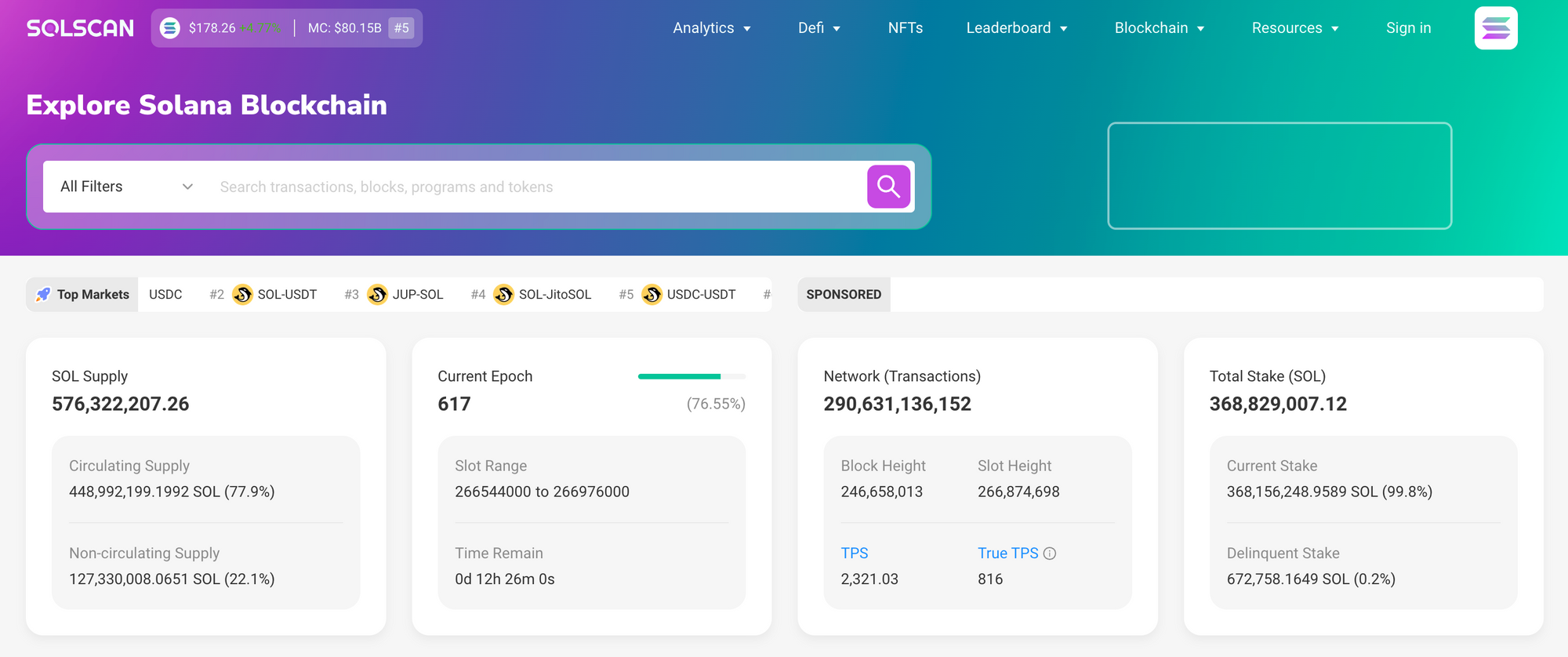
How I Use the solscan explorer in my daily workflow
I use the solscan explorer as my primary read-only lab when I’m researching projects. Wow! First I do a shallow sweep: check holders, recent transfers, and top token accounts. Then I go deep—inspect transaction logs, parse program calls, and map wallet interactions across marketplaces and bridges. This layered approach weeds out the noise and surfaces real signals.
Really? Be mindful of the things that feel like signal but are actually noise. Short-term spikes from airdrops or bot runs often mask long-term health. Medium-term metrics like active holders retention and repeated unique buyer counts matter more to me than a single high-volume day. Long-term value tends to correlate with organic community buys and utility-driven transfers, though exceptions always exist.
Whoa! Another tip: use token mint metadata to validate rarity claims. The explorer shows creator addresses and on-chain metadata links, which can disambiguate legit drops from copied metadata. My instinct said trust the collection page, but reality taught me to verify programmatically. That extra step prevents getting fooled by scammers who mirror metadata off-chain.
Here’s a practical checklist I run fast: holder concentration, recent mint timeline, transfer velocity, program call signatures, marketplace receipts, and cross-wallet clustering. Wow! Each item is quick to scan and often tells you whether a deeper dive is necessary. I’m not 100% magical; I still miss things sometimes, but this checklist reduces false alarms and prevents a lot of regret buys.
FAQ
Can I track an NFT’s full provenance on Solana?
Yes, you can follow mint events, ownership transfers, and program-level interactions that affect the token. Wow! For complex provenance you’ll need to read program logs and sometimes correlate multiple transactions. I’m biased toward explorers that expose low-level logs because they let you reconstruct the narrative rather than guess it.
Is on-chain analytics enough to judge an NFT’s value?
Not entirely. Short bursts of on-chain data help, but value depends on off-chain factors like community, roadmap, and partnerships. Medium-level analytics should inform, not dictate your choices. On one hand charts tell you where attention is; on the other hand community sentiment and utility complete the picture.
How do I avoid being misled by bots or wash trades?
Look for clustering patterns, wallet re-use, and identical transfer timings across many tokens. Wow! Correlate marketplace signatures and check whether the same program accounts appear in many suspicious trades. I’m not 100% certain any single heuristic is perfect, but layered checks reveal most manipulation attempts.